My foray into Virtual Reality (in India)
Let’s talk about my foray into Virtual Reality. Ready to escape the mundane and enter a realm of endless possibilities?
Growing up, I used to be quite a big reader of fiction.Time Riders, Goosebumps, 39 Clues (these were really expensive for 13 year old me), and the Hunger Games were some of the books you could see sprawled around my house. And a LOT of zombie books (World War Z the movie ruined World War Z the book).
One of the books that I read back in the day was Ready Player One. The idea that you could put a headset on and enter another world enthralled me. It was always a thought at the back of my mind whenever I tried playing a video game. But as all things go, I slowly started to forget about my memories reading the book.
And then in March 2018, they released the movie based off the book. Watching this spurned my old interest in VR once again. And now, I really wanted to try VR out. But headsets were still expensive, especially for 17 year old me (not to forget the premium you have to pay to ship tech into the country). Discouraged as I was, I wasn’t going to give up on this Quest of mine.
What is Virtual Reality?
So Virtual Reality is the term used to describe a three-dimensional, computer generated environment which can be explored and interacted with by a person. And well.. you can interact with objects in this generated environment.
So let’s take a look at how the landscape of VR headsets looked around this time.
VR Headsets (2010 – 2018)
So way back in 2010(I feel so weird saying this),Oculus, a VR startup, started a crowdfunding campaign for their plans to develop a VR headset. This culminated in the release of the Oculus Rift DK1, launched in 2013. And then in the year 2014, Facebook (now Meta) acquired the company for a small sum of $2 billion. This one buyout changed the landscape for all headsets back then and even now.
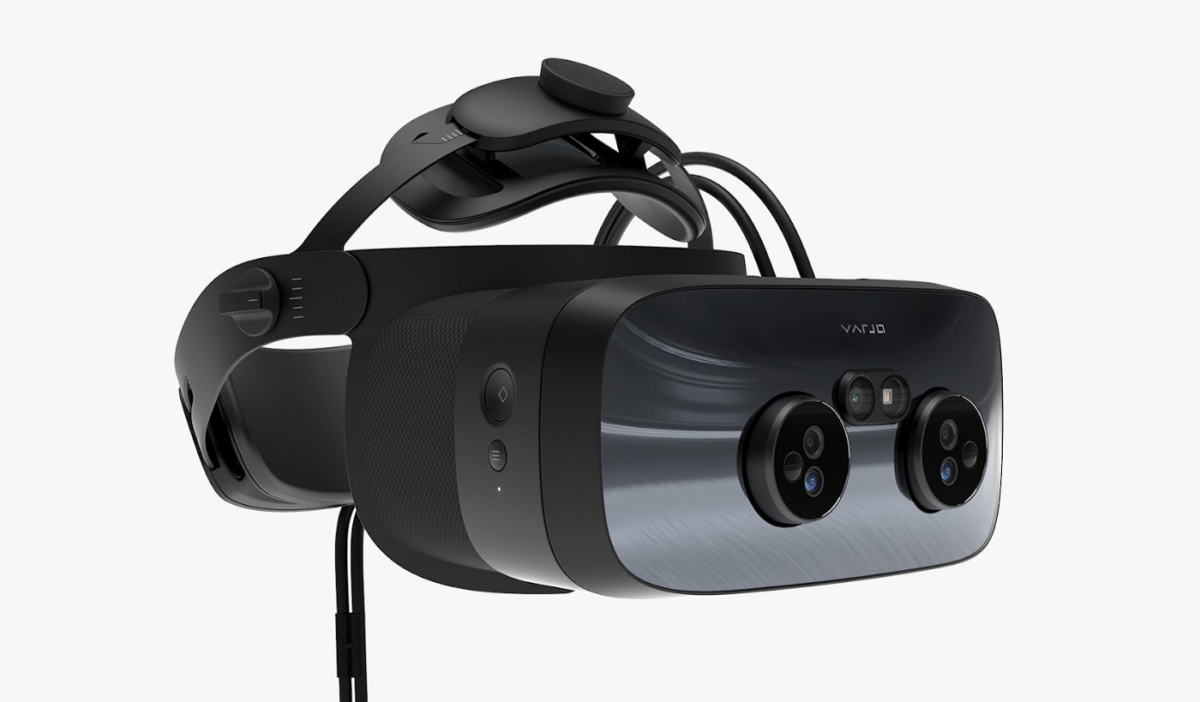
Since then, we’ve had both consumer grade as well as enterprise grade headsets make their way into the market, such as HTC’s Vive, Steam’s Index, and both the Varjo and Pico line of headsets.

Some of the main issues preventing wide scale adoption of these headsets were the cost of buying both the headset and a device capable of outputting to the display and the lack of mobility while using these devices (you needed to connect a wire to the headset, and sometimes you ended up all tangled up).
Of course, we had some budget headsets pop up, such as Google Cardboard or the Galaxy GearVR which had you use your mobile as the display… and this isn’t really the greatest experience.
Fun fact, the Gear sold so many headsets that at one point it was the highest selling VR device.
Back to the story
So it was around this time that I was strolling around in a mall when I noticed a stall where they would let you use a VR headset for a certain amount of time.
This was something I just had to try. So I remember spending the cash, and ended up playing this trashy zombie shooter game 🙁
Not the experience I dreamt about now was it?
And I think this was around the time when my interest in VR dipped to the lowest point it had been. And thus, I gave up on my hopes (for now at least).
But the Quest isn’t over yet!
May 21, 2019. The day they released the Quest. A standalone VR device which supported 6 Degrees of freedom (you can move in any direction), internal sensors + an array of cameras, all running on a Snapdragon 835 (for all my non-techy readers, pretty fast but ).
What made it so much better than the rest of the headsets? Well, it solved the issues preventing most people from trying VR. At $299, it was one of the cheapest headsets available on the market. And since it was standalone, you didn’t need to connect any wires to play.
It brought a lot of attention to Meta’s VR division. And they followed this by releasing the Quest 2, an improvement of the Quest but now lighter, with higher display resolution and refresh rate AND you could connect it to your PC wirelessly (added later).
The price? Once again, $299
Back to the story
So a few weeks back, I noticed that the Quest 2 was available on Amazon, at not that much of a premium. I’d heard good reviews about it, but never really researched too much. So I took a leap of faith and purchased it, wanting to be a guinea pig.
And honestly, it did not disappoint.


My cool cyberpunk home. Complete with a nice view of the city.

Ended up climbing a huge mountain which took around 20 minutes and my shoulders ached for days after 🙂

Turns out Darth Vader is 6’6? He looks GIGANTIC. (also, why isn’t he Dark Vader?)


And well… it was euphoric. The first few minutes actually had me gobsmacked. I even got my dad to try it on, and for the first time ever, I saw him actually enjoy a game I liked.
Movies feel insane, you feel like you’re sitting in a theatre (the above picture can also be accessed without VR).
And I think that’s where Meta is trying to make their audience. Bringing in people who just like to hop on for a few hours a week. And they’ve hit the price exactly.
However, there are some things I’d like to point out about the headset (and some specifically affecting India)
The Cons
Firstly, the headset isn’t supported in India. So if something goes wrong, you don’t have a way to get anything replace (there are certain websites online which sell parts, but good luck figuring out how to fix things on your own)
Another issue with the point above is in regards to the Oculus Store (where you buy apps). Sadly, due to the new RBI law, Indian Credit/Debit cards no longer work with the store (however, I have heard a rumour that forex cards and Amazon ICICI credit cards work) . So you’re stuck with PC VR games… (unless you plan to side load games)
I’m really lucky to be very resistant to VR motion sickness. However, not everyone is the same. Some people end up not being able to play due to how much it effects them. Something which you’ll have to keep in mind if you plan on getting one.
Also, software isn’t really that well developed. There’s not really much to do. A ton of research probably needs to be done, and probably a lot more investment. Meta has showed that with a cheap product that it is possible to grab market share but there needs to be software to capitalize on it.
And my final issue… and this really affected me a ton.
VR Disassociation
Have you ever felt like you were floating outside of your body while in a virtual reality experience? This phenomenon is known as Virtual Reality Disassociation (VRD).
VRD occurs when an individual experiences a disconnection between their physical body and their virtual reality environment. It can lead to feelings of disorientation, dizziness, headaches, and even anxiety or panic. The intensity of the virtual reality experience, the individual’s susceptibility to motion sickness, and the quality of the virtual reality equipment being used are some of the factors that can contribute to VRD.
The day after I bought the headset, around 8 PM, I started to feel really weird when sitting. Like I couldn’t ‘feel’ my hands. It felt… fake? And then I started seeing the Guardian lines (they show up in the headset when you get too close to a wall). My mind felt really weird? I felt like I was wearing the headset all the time.
Honestly, this freaked me out so much when it started happened. Spent quite a bit of time researching about why it was happening before I found the actual term. And it took another week before I finally got over it and actually felt normal.
VRD is considered a normal and temporary side effect of virtual reality immersion and it is not a mental disorder. But in some rare cases, it may indicate an underlying condition such as vestibular disorder, or it can be a symptom of other conditions such as migraines. To prevent VRD, it is important to take breaks, to be in a comfortable environment and to have comfortable VR equipment, and to provide a natural and realistic VR experience.
If you experience VRD and it persists or makes you feel uncomfortable it is recommended to consult a doctor or a healthcare professional to rule out any underlying conditions.
Winding up
I’m not sure how I can bring this to a close. There’s just so much that I can’t put it into words. And it’s something I hope everyone could try for a bit.
And I think the best way for me to wind this up is for me to show some footage.
Also it’s been quite a while since I’ve last written here, mostly due to a lack of motivation. Not any longer though.

